

You know you should be walking more. You’ve probably even planned to, more than once.
But between work, cooking, errands, phone calls and everything else, the day fills up. By the evening, finding a free half hour feels impossible.
Over the years, many of the women I’ve worked with have felt the same way. What I tell them is simple: you don’t need the half hour all at once.
By the end of this article, you’ll also know which 10-minute walk does the most for your body. It’s probably not the one you’d guess.
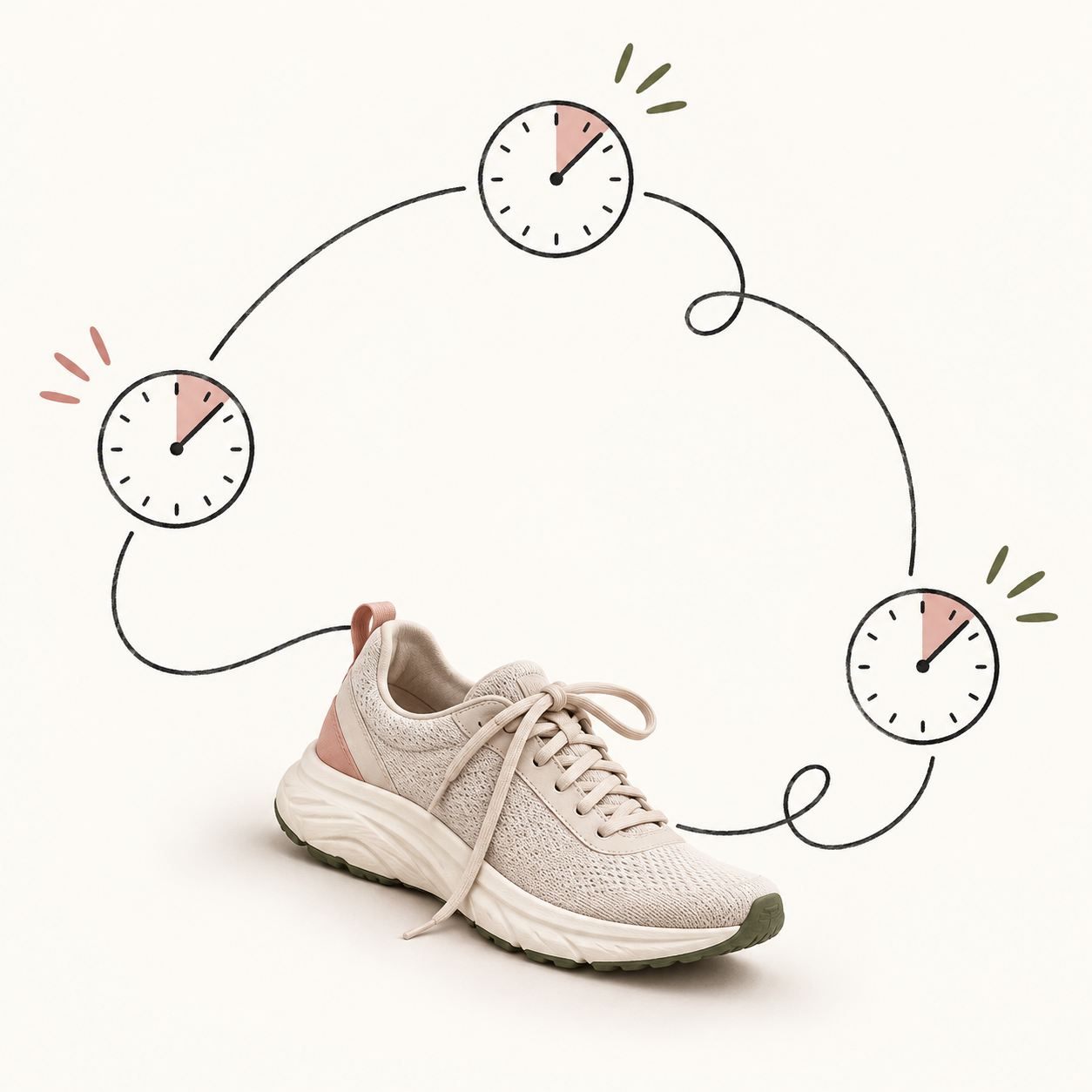
A 2019 review looked at over a thousand people, mostly women. Some walked 30 minutes in one go. Others walked three times a day for 10 minutes.
The results were about the same. Both groups saw benefits to their heart, blood pressure, cholesterol and blood sugar.
Health experts now agree: every bit of walking counts.
One tip: make each walk at least 10 minutes. A 2025 study showed that a proper 10-minute walk does more for your heart than a few steps here and there.
Most of us don’t skip walks because we’re lazy. Our days are simply full.
Ten minutes is easier to find. It fits between finishing work and making supper, on the way to an errand or a shiur, or while the cholent is cooking.
A short walk you actually take is worth far more than a long one you keep putting off.
And it turns out that when you take those ten minutes makes a real difference.
When you eat, especially bread, rice, pasta or cake, your blood sugar goes up. That’s normal and healthy.
The problem is when it shoots up quickly and high.
Think of it like a roller coaster. A fast climb is often followed by a fast drop.
The dip. When blood sugar falls quickly, you can feel tired, foggy or irritable. Many women know this as the afternoon slump.
The cravings. That dip can make you feel hungry again soon after eating, even when you’ve had enough. That’s often when the chocolate starts calling.
Fat storage. When there’s more sugar than your body needs right now, it stores the extra, some of it as fat.
The long term. When this happens meal after meal for years, the body can find it harder to handle sugar. Over time, that raises the risk of diabetes and heart problems.
Steadier blood sugar means steadier energy, fewer cravings and a healthier body. This is where walking comes in.
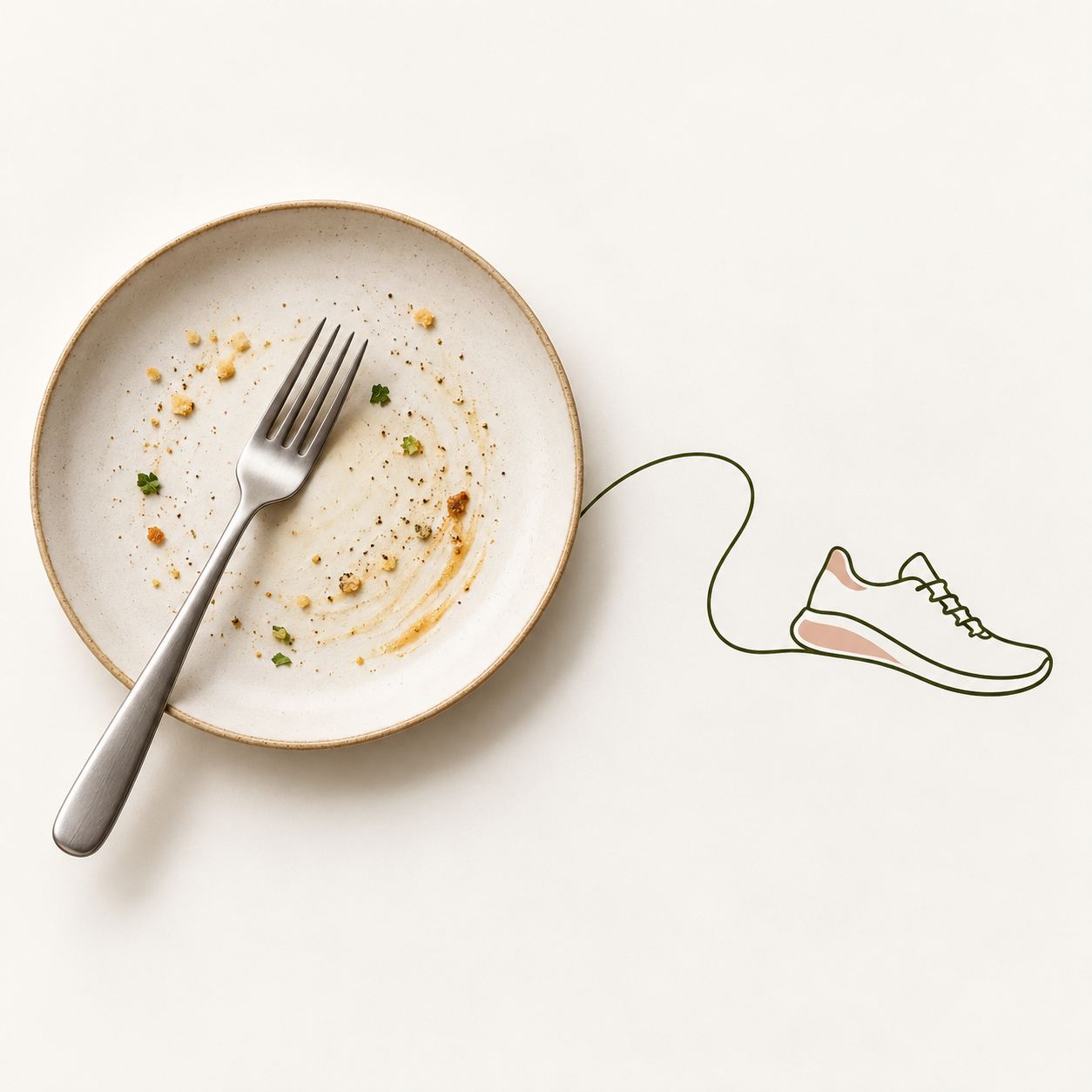
When you walk, your muscles use sugar from your blood for fuel. A walk soon after eating uses up that sugar while it’s still there.
In a 2016 study, people walked 10 minutes after each meal instead of 30 minutes at another time. Their blood sugar stayed lower, especially after supper.
So that’s the walk I mentioned at the start. Supper is often our biggest meal, and most of us sit down for the rest of the evening afterwards. Ten minutes on your feet after supper does the most good.
The most important thing is how much you walk over the week. Aim for at least 150 minutes, which is around 20 to 30 minutes a day.
Walking after meals isn’t extra on top of that. It’s simply the best time to fit in the minutes you’re already doing.
150 minutes a week is the target for general health: your heart, blood sugar, energy and mood.
If you’d also like to see a change in your weight, aim higher. A 2024 review found that the more people walked, the more difference they saw. Walking about 45 minutes a day made a bigger difference than 20.
The easy way to get there is to stretch each walk from 10 minutes to 15. Three 15-minute walks a day add up to about 45 minutes.
Walking also works best alongside balanced meals. A walk uses energy, but a couple of biscuits can quickly put it back.
Pick up the pace. Walk as if you’re slightly late for something. You can talk, but you couldn’t sing.
Find a hill. Walking uphill takes much more effort, and in Yerushalayim there’s no shortage of hills!

Only time for one walk? Make it the one after supper.
Can’t walk after meals? Walk whenever you can. The minutes still count.
Can’t get out at all? Use the stairs, hang the laundry, or walk around while you’re on the phone. It isn’t a full walk, but it’s much better than sitting.
Walk to the makolet instead of taking the car.
After Shabbos lunch, go round the block, on your own, with family or with your guests.
After supper, ask a friend, neighbour or sister to come with you. Ten minutes goes quickly when you’re chatting.
Every day: walk for 10 minutes after each meal, starting within half an hour of eating.
If you can only do one: walk after supper.
For your health: aim for at least 150 minutes a week.
For your weight: stretch each walk to 15 minutes, and pair it with balanced meals.
If you take medication for blood sugar, are pregnant or have a heart condition, please check with your doctor first.
Tonight, after supper, put on your shoes and walk for ten minutes. Do the same tomorrow, and the day after.
At the end of the week, notice how you feel in the evenings. I think you’ll be pleasantly surprised.
Want a personal plan? Surele Donner is a Certified Nutrition and Wellness Coach in Yerushalayim with over 25 years’ experience. Her 4-Week Healthy Reset is four one-to-one meetings, in person or on Zoom, with a meal plan built around your life, your Shabbos table and your blood sugar.
Details and testimonials: nutritionbysurele.com | 053-311-6110 | WhatsApp 051-508-8264