


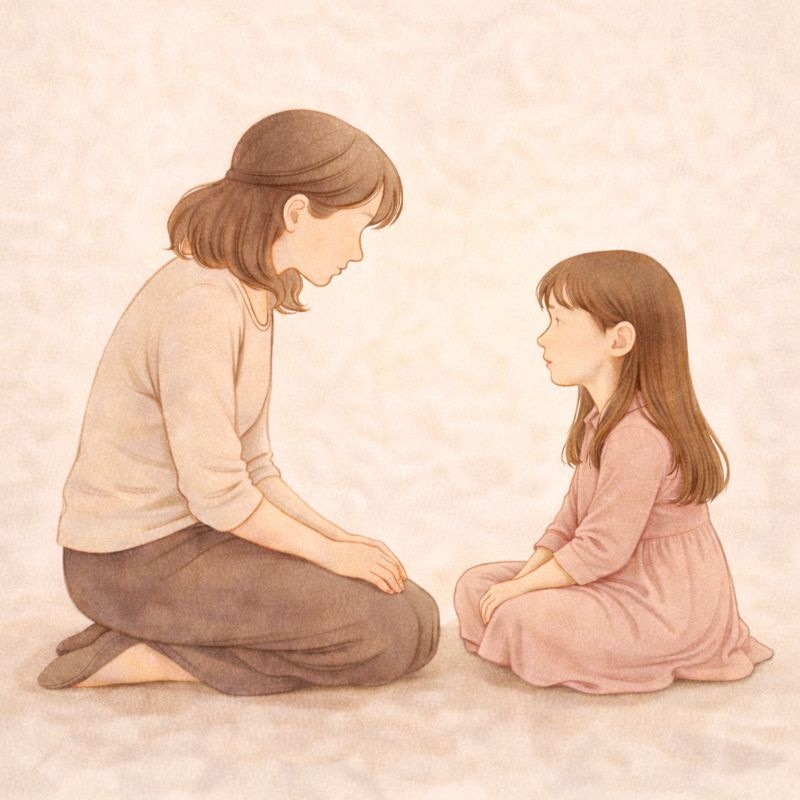


As an EFT practitioner with a background in psychology, I’ll give you my definition. Others may disagree.
Trauma is any experience that overwhelms a person’s nervous system and is stored in the body and mind as unresolved emotional charge.
In EFT terms, it’s less about the event itself, and more about what didn’t get processed at the time. Read on and I’ll explain.
Trauma happens whenever a child (or anyone, for that matter) is alone with a big emotion - or feels like they are alone with it. When there’s no one to help them process what they’re feeling, it doesn’t move through. It stays in the mind, the body, or both.
This is why two people can experience the same event and have completely different outcomes. One may walk away fine, while the other is left with trauma. The difference could be as simple as: one had someone to tell, and that someone fully understood them and was present with them - and one didn’t have that.
Once we really understand this, it changes how we know we have to show up for our children. Trauma isn’t so much what happens, but how deeply our children know someone is there for them - how seen they feel, knowing we are there to hear everything without judgement. When we do this well, we’re protecting them even when we’re not with them.
This applies to traumas big and small. Let me give you some examples.

Think about the extreme case of child sexual abuse, chv may it never come anywhere near you.
Perpetrators do not choose victims randomly. They choose very carefully, based on a child’s vulnerability, access, and - most importantly - the likelihood of secrecy. They are looking for a child who will not tell an adult.
By being a parent who doesn’t leave a child unattended, you are protecting them.
And by being a parent who keeps communication open, compassionate, and non-judgemental, you are protecting them even when they are not with you - on two levels.
First, the perpetrator (who is unfortunately often someone known to the family) can tell when a child feels safe running to Mommy and telling her anything. They will not touch that child.
Second, if something does happen, that child is protected from ongoing trauma. How? Because they know they can tell you. You will step in immediately, stop things from escalating, and get the help that’s needed - and your child is not left sitting alone with this terrible thing that’s just happened to them.
Sadly, for many abuse survivors, a huge part of the trauma is that they felt the need to stay silent. Before the tragedy even happened, they had the feeling that there is no one they can tell things to who wouldn’t judge them, who would believe them unquestionably, who would be there for them with complete love and acceptance.

We look for things like:
We can also see it through the body, such as autoimmune flare-ups - a sudden worsening of asthma or eczema, for example.
Keep an eye out for these changes. Often a mother will come to an EFT session for her child (I do a lot of surrogate EFT work for children through the mother) saying, ‘Something is off with my child. He’s not himself.’ Or, ‘She’s out of character. Every little thing’s a meltdown - and she wasn’t always like this’.
Whenever something is happening that carries heightened emotion - even if your child is very young, or even if it seems to have little to do with them - it’s important to offer an age-appropriate explanation and channel for communication.
Sit with them. Reassure them. Tell them whatever they need to hear in order to feel safe while this is going on.
Even with babies and toddlers, words matter. Communication matters. I also tell people to say during pregnancy: if something stressful is happening, put your hands on your belly and tell your baby, This is Mommy’s stress. Yes, something is going on - but you are safe. I love you. This has nothing to do with you.

A classic example is when a younger sibling is born — or when Mommy has to be hospitalised for another reason.
You are not wrong in thinking your child will be fine going to stay with the Aunty they know and love. They will be fine. But did anyone stop to tell them when Mommy is coming back?
So often, it’s the things that don’t get said that result in the trauma.
It’s vital to give an age-appropriate explanation. Sit them down and say something like:
You’re going to sleep at Aunty Rachel’s house, then wake up and go to gan. Then you’ll sleep there again, go to gan again - and after that, you’re coming home and Mommy will be there.
With all the emotions and changes around a new baby, it happens so often that a sibling is left with this unspoken terror: Mommy disappeared. She’s back now - but I don’t know when she’ll disappear again.
.jpg)
I want to share another example, where nothing directly happened to the child, but a lot was happening around her.
All the cousins were rollerblading in the park, including little four-year-old Dassa. Suddenly, one of the older kids, all the way on the other side of the pond, fell badly. An ambulance had to be called.
One adult took charge, and by the time the younger children got closer, big cousin Yossi had already been taken away in the ambulance.
You might think: Is this traumatic for Dassa? She barely saw anything.
But here’s what actually happened.
Dassa heard frantic phone calls. She saw panic on the adults’ faces. She saw from a distance cousin Yossi disappear into the back of an ambulance - and she had no idea where he went and if he was even coming back!
And once it was over, the adults took a deep breath and said, Who wants to go on the slide?
This story came to me from an adult client with a phobia. When we traced it back, this was the root. Once we tapped through this memory, the phobia disappeared.
When a child is old enough to sense big emotions - whether their own or those around them - they need communication. They need to be checked in with. They need an explanation, and some reassurance. They need your presence.
This is my takeaway for you:
Trauma sets in when a child feels alone with something big.
You can't fix everything. And you don't need to. You just have to be present with them in that moment of big emotion - and magically they will be able to process it themselves.
Just let them know, whenever they need you - you are with them.
Avigail Benezra is an EFT Practitioner and Mom living and helping clients live their best lives in Jerusalem, Israel.
I use EFT Tapping with mothers to resolve emotional trauma for children, helping kids get back to their happy, fun, regulated selves.
BsC Psych Hons - EFT AAMET II
0539303722
EFTbyAvigail.com



.svg)